
FitPlay
Personalized Training & Reward System
Training Planner: from workout catalogs to a personalized, editable plan
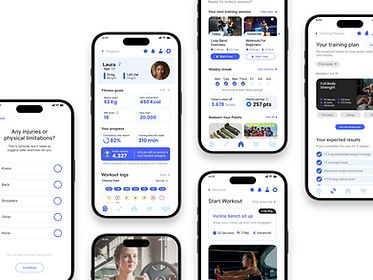
The Training Planner is the core feature that turns FitPlay from a workout app into a decision-making assistant.
This case focuses on how the planner was designed to:
-
Remove daily uncertainty
-
Adapt to real-life changes
-
Stay personalized without becoming rigid
The problem
Most fitness apps offer many workouts but no plan.
Users are expected to:
Decide what to train
This leads to fatigue, inconsistency, and abandonment.
Decide when to train
Decide how to adapt when life happens
Common issues observed during benchmarking:
Training sections are just workout catalogs
No clear “what should I do today?” answer
Plans can’t be edited, and if they can logic breaks
Rest and recovery are poorly integrated
Progress isn’t tied back to planning decisions
Missed workouts aren’t handled gracefully
Users don’t fail because they lack motivation. They fail because they lack clarity and practicity.
The planner’s job is to remove daily decision-making while keeping autonomy.
Design goal
Design a planner that:
-
Suggests what to do each day
-
Adapts to missed or changed workouts
-
Allows edits without chaos
-
Balances effort, recovery, and goals
-
Makes progress feel intentional
Success meant users should feel:
“I know exactly what to do and I can still change it.”
What FitPlay does differently
Planning first. Browsing second.
Instead of starting with workout categories, FitPlay starts with a personalized plan.
The planner:
-
Uses onboarding data
-
Rebuilds itself dynamically
-
Always presents a clear next action
Browsing workouts becomes optional not required.

The Planner as a System (not a Calendar)
The Training Planner combines:
-
Goals & availability
-
Body data & experience level
-
Recovery logic
-
Reward balance
To automatically:
-
Distribute intensity across the week
-
Insert recovery or rest days
-
Adjust future sessions when edits happen
User changes never “break” the plan. The system adapts.

One planner.
Many paths.
The same planner supports different needs:

Persona
How the planner adapts

Busy professional
Short sessions, fewer days
Beginner
More recovery, simpler structure
Gamified user
Higher intensity, performance balance
Advanced user
Safe exercises, recovery emphasis
Injury-aware user
Clear milestones & rewards


Design decisions
Small choices that shaped the entire experience.
A recommended workout exists every day
Eliminates decision fatigue and helps users start immediately.
Planner is editable but self-healing
Control without breaking logic
Rest days are planned, not empty
Reframes rest as progress
Outcomes are predicted, not promised
Realistic motivation
Points are tied to effort, not completion speed
Fair rewards
Why it works
Reduces cognitive load
Supports real-life flexibility
Editable plans → adaptability
Reinforces consistency over perfection
Keeps users focused on today not the whole plan
A good training plan doesn’t tell users what they must do.
It tells them what makes sense and adapts when life doesn’t.
Outcome


